
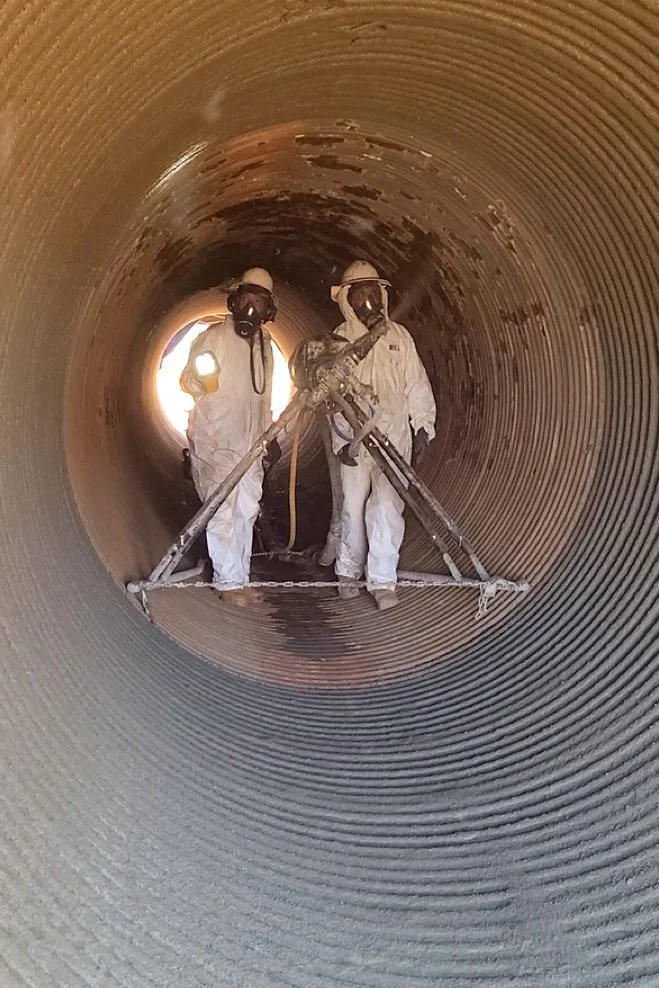
Managing failing subterranean infrastructure is a constant race against time. When stormwater networks or trunk sewers deteriorate, traditional excavation brings severe operational headaches: compounding traffic costs, prolonged community disruption and expensive surface reinstatement. Balancing these public impacts against strictly managed capital budgets can be a high-stakes challenge for asset managers.
This comprehensive guide evaluates pipe relining vs replacement to help you choose the right rehabilitation strategy. We break down the definitive cost, disruption and structural parameters dictating your next project decision.
What is pipe relining?
Pipe relining is a trenchless rehabilitation technology that restores the structural integrity of deteriorating underground conduits without extensive excavation. The process involves inserting a flexible, resin-impregnated liner, typically using Cured-In-Place Pipe (CIPP) or slip-lining methodologies, directly into the host pipe via existing maintenance holes or access pits.
Once positioned, the liner is expanded and cured using heat, steam or ambient air, creating a seamless, high-strength pipe-within-a-pipe. This technique effectively seals cracks, bridges structural voids and eliminates groundwater infiltration. For larger stormwater networks, utilising specialised culvert relining services provides a highly efficient, non-disruptive alternative to traditional open-cut civil works.
What is pipe replacement?
Traditional pipe replacement involves open-cut excavation to physically remove a damaged conduit and install a new one. This conventional civil method requires digging a trench along the asset’s alignment, followed by backfilling and surface reinstatement. While open-trenching results in a large site footprint and significant community disruption, it remains a vital methodology for addressing complete structural collapse, severe ground subsidence or projects requiring immediate hydraulic capacity upgrades and structural realignment.
Pipe relining vs replacement: a quick comparison
| Core Parameter | Pipe Relining | Pipe Replacement |
|---|---|---|
| Methodology | Trenchless rehabilitation utilising a flexible, resin-impregnated liner inserted into the existing host pipe. | Traditional open-cut excavation to physically extract the old conduit and install a brand-new asset. |
| Excavation Level | Minimal to none; accesses the underground infrastructure via existing maintenance holes or pits. | Extensive; requires digging a continuous trench along the entire length of the asset alignment. |
| Primary Use Case | Remediating structural cracks, joint failures, internal corrosion and root intrusion within a stable host pipe geometry. | Rectifying complete structural collapse, severe ground subsidence, uncorrectable grading issues or capacity up-sizing. |
How does pipe relining compare to replacement in cost and disruption?
Evaluating the total cost of ownership for an asset rehabilitation project requires looking beyond the initial material and labour expenses. When conducting a holistic assessment of pipe relining vs replacement, civil works must account for both direct site costs and the indirect socio-economic impacts on the surrounding community.
Here’s how trenchless methods compare to traditional excavation across key operational and financial vectors.
| Evaluation Vector | Pipe Relining | Pipe Replacement |
|---|---|---|
| Project Footprint | Concentrated entirely around existing access pits and maintenance holes, eliminating the need for longitudinal trenching. | Large, continuous corridor along the asset alignment, requiring heavy machinery, soil staging areas and extensive safety hoarding. |
| Community Disruption | Minimised traffic control, fewer road closures and negligible disturbance to local business operations or residents. | High impact with prolonged road closures, complex detours, noise pollution and significant disruption to community transit networks. |
| Direct Reinstatement Costs | Low to non-existent, as there is little to no need to rebuild roads, replace concrete pavements, re-landscape or navigate utility relocations. | Substantial expenses allocated to asphalt re-paving, structural pavement reconstruction, landscaping and resolving utility clashes. |
| Indirect & Overhead Costs | Rapid delivery timelines compress the overall project schedule, reducing ongoing engineering management and site supervision overheads. | Extended project durations increase administrative asset management costs, site security expenses and exposure to weather-related delays. |
What types of pipe damage can be repaired with relining?
Trenchless pipe relining is a highly versatile rehabilitation solution capable of addressing a wide range of structural and non-structural defects within stormwater, sewer and drainage networks. When weighing up pipe relining vs replacement, it helps to understand the specific types of asset degradation that modern liner systems can effectively remediate, provided the host pipe retains its original geometric profile:
- Structural cracking and fractures — Relining seals circumferential and longitudinal cracks caused by ground movement or heavy surface loading, fully restoring the conduit’s structural integrity.
- Joint failures and displacement — Ground shifting often causes pipe joints to separate, leading to minor misalignments and localised leaks. Lining bridges these structural gaps, creating a continuous, leak-free conduit.
- Root intrusion — Tree roots naturally exploit pipe joints and micro-cracks to seek moisture. A cured-in-place liner completely seals these entry points, stopping root ingress and preventing future blockages.
- Internal corrosion and erosion — For concrete, earthenware or metal pipes suffering from chemical attack or abrasive wear, relining introduces a corrosion-resistant barrier that halts wall thinning and material degradation.
- Infiltration and exfiltration — By sealing the internal surface of the asset, relining stops groundwater from entering the system and prevents environmental contamination from exfiltrating into the surrounding soil.
When is full pipe replacement the better option?
While trenchless technology offers significant advantages, it is not a universal solution for every failing subterranean asset. When assessing the limitations of pipe relining vs replacement, certain structural and hydraulic conditions mandate traditional open-cut civil excavation. Full pipe replacement remains the necessary choice under the following circumstances:
1. Catastrophic structural collapse blocks the conduit and prevents rehabilitation equipment from passing
Debris from a collapsed conduit blocks rehabilitation equipment and robotic packers from navigating the line. Forcing a liner into a collapsed pipe causes defective curing, leaving traditional civil extraction as the only viable pathway to restore service.
2. Severe ground subsidence compromises the asset grade and cannot be corrected by a flexible liner
Ground movement causing severe settlement or backfalls compromises the asset’s grade. Because a cured-in-place liner conforms exactly to the host profile, it cannot correct these hydraulic issues, meaning open-cut replacement is required to re-engineer soil bedding.
3. Increased hydraulic capacity requirements demand the installation of a larger diameter pipe
Relining reduces an asset’s internal diameter. If catchment modelling dictates a need for increased capacity to manage peak stormwater volumes, asset managers must choose full excavation to install a larger-diameter replacement pipe meeting civil compliance standards.
4. Severe geometric distortion prevents liners from negotiating the profile or restoring load-bearing capacity
Extreme deformation or crushing alters the pipe profile beyond acceptable tolerances. A flexible liner cannot negotiate a completely lost circular geometry or restore load-bearing capacity, making traditional excavation necessary to install a structurally sound conduit capable of bearing surface loads.
How long does pipe relining last?
From a long-term asset management perspective, pipe relining delivers an exceptional return on investment by matching the longevity of completely new infrastructure. Modern relining systems utilise highly durable epoxy and polyurethane resins engineered to withstand chemical attack, structural stress and abrasive flows.
These advanced composite materials provide an engineered design life of 50+ years. Integrating trenchless rehabilitation into an asset lifecycle strategy enables project managers to sustainably extend the service life of drainage networks, effectively deferring large-scale capital expenditure while ensuring long-term operational reliability.
Ready to plan your next rehabilitation project?
Choosing between pipe relining vs replacement requires balancing municipal budgets, community impacts and asset longevity. You do not have to make these high-stakes decisions alone. Partnering with experienced civil engineering specialists ensures your asset management strategy benefits from rigorous structural assessments and cost-effective rehabilitation methodologies.
Whether you are managing a complex stormwater network or assessing a single failing trunk sewer, the team at Ironstone Civil is ready to help you de-risk project delivery. Contact us today to discuss your upcoming infrastructure requirements.
